


The American Kennel Club (AKC) Museum of the Dog is a nonprofit art and history museum dedicated to the human–canine bond.
Combining fine art with high-tech interpretive displays, the museum is located in the iconic Kalikow building in Manhattan, New York.
The Wag visited the museum to meet CEO and Executive Director Christopher Bromson.
TW: Thanks for showing me around, what is the history Museum of the Dog?
CB: Absolutely, I’m so glad to have you here in our wonderful museum.
So the AKC Museum of the Dog has been around for a little more than 30 years. We started in 1982.
So it would spend 30 years in St. Louis, Missouri and then make a glorious return to New York just in time for COVID. So now that we’ve made it through that debacle, we’re really kind of settling into the New York scene, which we’re really thrilled about.

TW: How did you get involved?
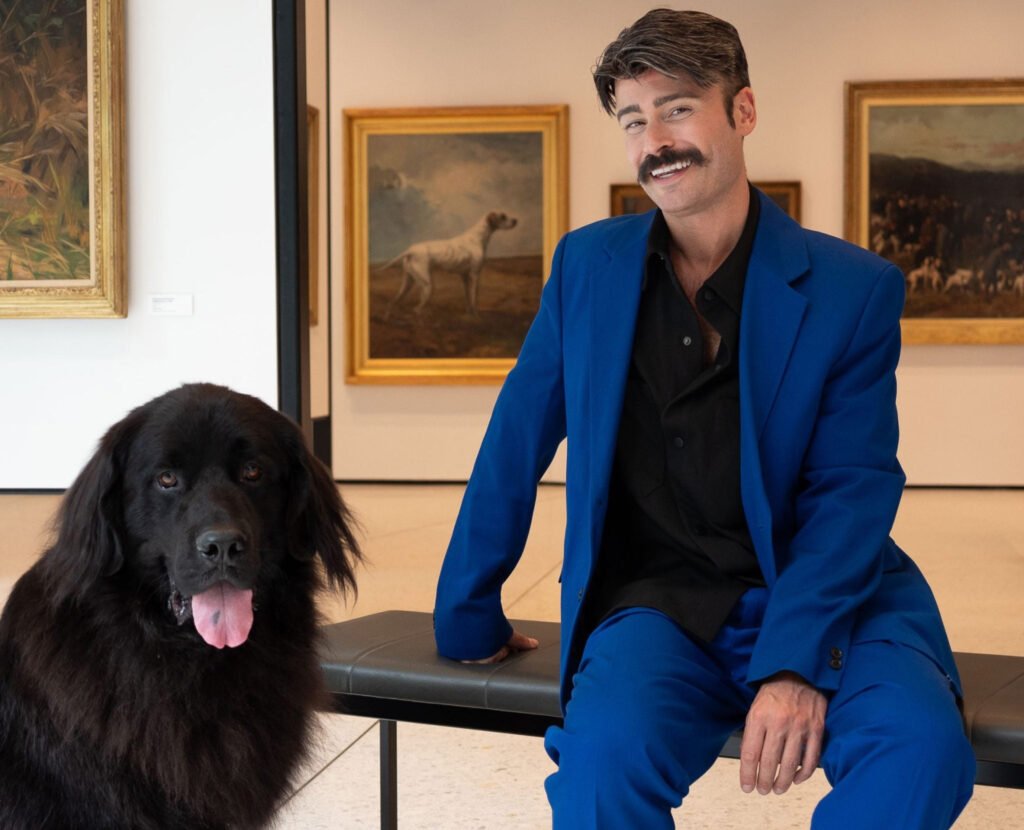
CB: I got involved in the museum through my own dog, Luca who is now approaching five years old.
He is a delightful newfoundland, full of slobber and love and fur. And he was really the one who got me involved here.
He serves as the chief canine officer of the museum, so he’s very involved in our programming and just a wonderful addition to my own life and just the world.
Today’s his day off but he’ll be here this weekend to run some family programming.
TW: This role sounds like the perfect job for you as a dog-lover?
CB: For 15 years before this I ran a non-profit in New York City, a little bit of a different subject area, we worked with survivors of violent crime.
We did a lot of therapy and legal advocacy and hospital intervention, but all my life we had dogs growing up, always purebred in a wonderful variety of breeds.
TW: What is like having a big dog in New York City?
CB: It’s wonderful. We’re very lucky to live on the corner of a park, so that makes it very easy in Brooklyn.
He’s rather well known in the park, so we get a lot of attention every time we walk, but it’s just great.
He’s very lazy around the house for lack of a more graceful term, but we have such fun swimming in the lake in Prospect Park and there are many places for people to do things, you know, with their dog in Brooklyn and in the city, so it’s wonderful to have him.
TW: I understand that the museum was actually the vision of two women?
CB: Our original board chairs were two women.
There is such a long history of art and appreciation of the depiction of dogs in the AKC and in the world and in the United States in particular.
Bee Godsell is not somebody who started the museum, but we are standing in front of her portrait.
She was one of the very early women who was approved as a judge in the AKC, the second woman, and she was a pretty prolific breeder of both Sealyham terriers and muffin ones and ended up in Santa Barbara, but really kind of started to change the world in the dog show world for women and make things far more accessible.
Our best representative artist here in the museum is a woman called Maud Earl, who was perhaps the most prolific dog painter,and painted so many famous dogs.
And as we walk through the museum, you’ll see so many examples of her beautiful work, the way she could just capture the essence of the dog is really remarkable and kind of stands out among many other artists, in my opinion.
TW: The art collection here is also a great way to highlight the role of dogs through the years, how it has changed and evolved.
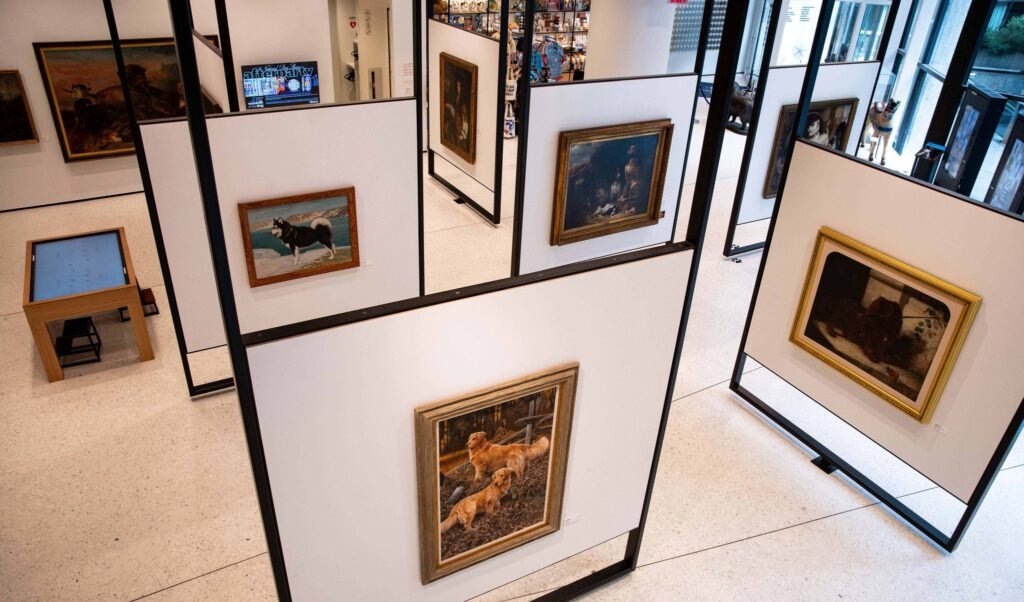
CB: Yes we have over 1700 pieces of art and different artifacts representing dogs throughout history.
And a very large chunk of our collection is from the 18th and 19th century, large format oil paintings that depict different ways dogs participated in life or different ways they worked alongside humans or different ways they showed up in the rings or just in people’s lives.
And so we really cherish celebrating the human canine bond throughout history.
One of our oldest paintings is from 1603, which depicts dogs in the hunt and the lion hunt, which was such a really well-represented activity back in those days of dog art, which kind of flowed into far more whimsical things these days.
But there’s such a wonderful rich collection of people depicting dogs and their role in society that we love to celebrate it.
TW: So you see the museum as playing an important role in capturing and preserving it?
CB: It’s one of our core tenets of our mission is to preserve the role of dogs and their history in society.
Another aim is to really create places and opportunities for people to celebrate their connection with their dog in this space or in a space that celebrates the culture of dogs.
So we really are continuously increasing the number of dog-friendly events we have every Friday, people are welcome to visit the museum with their dogs.
We do a lot of fun programming for dogs themselves. So really we are aiming to preserve the history and also to celebrate the present.
And the future of what dogs will continue, what role dogs will continue to play in our lives,because I think they will never be replaced.
There is just something too special about the way we connect with this species that is unlike anything else. And it’s obviously a very active museum,
TW: You have a mix of art work, but also fun, interactive exhibits?
CB: Yes we have a rotating list of exhibitions, but we also, as you say, have a few interactive things.
You can visit a machine and find out what kind of dog you are. And we have a virtual dog that you can train and a lot of information about different breeds and different pieces of art and works like that.
We also have a library that has about 4,000 volumes that people often come and just spend a day perusing books on how to train a puppy or about their particular breed.
We have every AKC breed represented in the library and it’s a wonderful place for people to just kind of disconnect from the chaotic city and really feel enriched by the dogs.


TW: Where are the museum’s visitors from?
CB: We have a pretty robust mix of visitors and locals. So a lot of our membership is local to New York because they, you know, they have access to do things for free here in the museum and can access some of our programs.
But we have a wild array of diverse membership and visitors from across the country and the world.
Now the AKC is spread out across, of course, the entire United States. So we have virtual programs and virtual membership options to make sure that people can engage with our collection from all over.
And we recently partnered with an organization called Bloomberg Connect, which you can find us, the AKC Museum of the Dog on Bloomberg Connect, which is an app that anyone can access for free from anywhere in the world.
We have a lot of really fun, exclusive content there so that people, no matter where they are, New Zealand included, of course, can participate and kind of look at different pieces of our collection. And there’s a few videos on there and some deeper dives into some of our pieces.
We see a significant number of tourists from the Spanish and Mandarin speaking parts of the world, especially, but many Europeans and a fair number of people from New Zealand. We actually had a delegation recently that was so fun.
A woman and her friends and family came for her birthday and we did a little private tour. It was really spectacular, so we love welcoming people from all over the world.
TW: How is the museum supported?
CB: The AKC is a primary supporter of ours and we also have different styles of funding and different donors who support our work.
We also support ourselves through membership and through the people who visit the museum.
TW: And are you always adding to the collection?
CB: We are always on the lookout for new pieces. We have a curator who is a remarkable, brilliant mind in the world of art in general, but specifically dog art, Alan Fausel, who was always on the hunt for the most important piece.
We’re actually standing by our newest acquisition.
It is by an artist called Wardle, who was a very, very famous painter and this is one of the most important paintings of bulldogs
I think what sets this painting apart is that it’s a very early painting of bulldogs and the number of bulldogs and their relation to one another is unique to have depicted in one painting.
So I think those are a couple of the things that really set this one apart. But this one we purchased. So we did a little crowd funding from the bulldog people across the country and one of our very generous board members supported the difference.
But we do receive things through requests and donations of actual art. So people often remember us, which we appreciate.
TW: I guess it is an ever changing collection?
CB: There are, it never really ends. And I think we’ll continue to kind of push into the future.
There are many artists just within New York City who are doing really fascinating things with dogs in art. So we’ll be happy to start bringing some of that to our walls too one day soon.

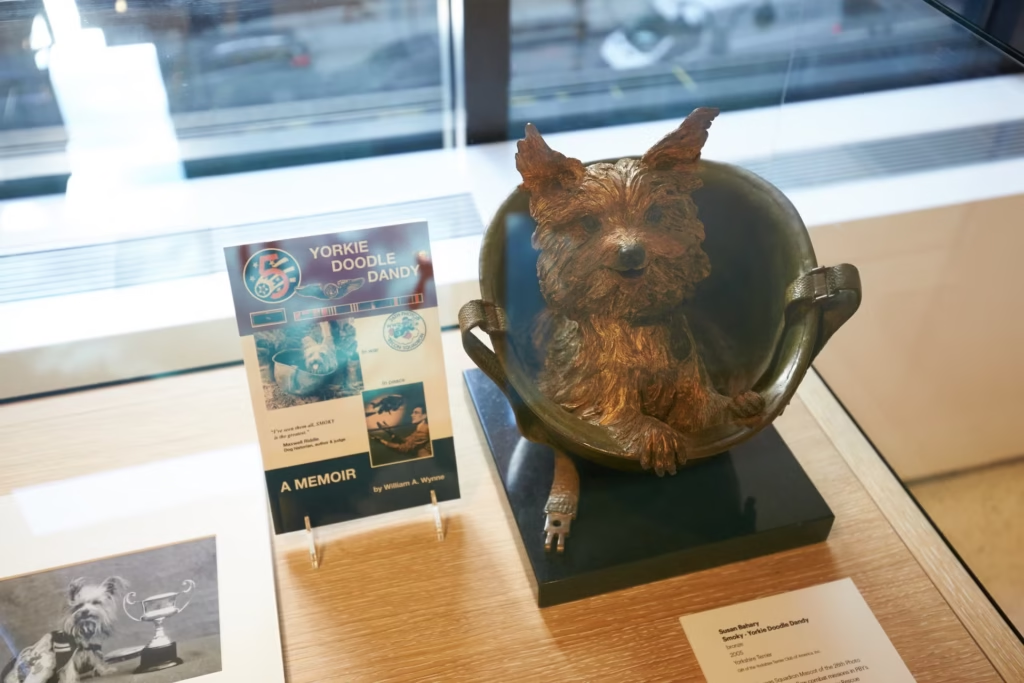
TW: We are standing in front of the exhibition about the famous dog, Smoky, the Yorky doodle?
CB: He was a squadron mascot of the 26th Photo Reckon Square, who flew combat missions in the Air Force. And the third emergency rescue squadron in 1944. So Smoky was kind of face of the Air Force. And there’s actually a picture of him jumping out of an airplane.
This is his suit,his paratrooper suit. And so we have a wonderful friend of the museum, Susan Bajari, who’s a really established sculptor who created a representation of Smoky here, the Yorky doodle dandy.
TW: A wonderful example of the interesting role of dogs through the years?
CB: There are so many and yes Smoky is a really great representation of one of the more unique dog jobs that has existed throughout time. And there are a few other little gems pickled throughout the museum that represent those things too.
TW: It really is a wonderful collection, thanks for talking to The Wag.
Thanks for coming, we hope to see you again real soon.
The AKC Museum of the Dog is located at 101 Park Ave, New York.